
July 6, 2026
7/6/2026 | 55m 54sVideo has Closed Captions
Volodymyr Zelensky; Timothy Snyder; Tjada D'Oyen McKenna
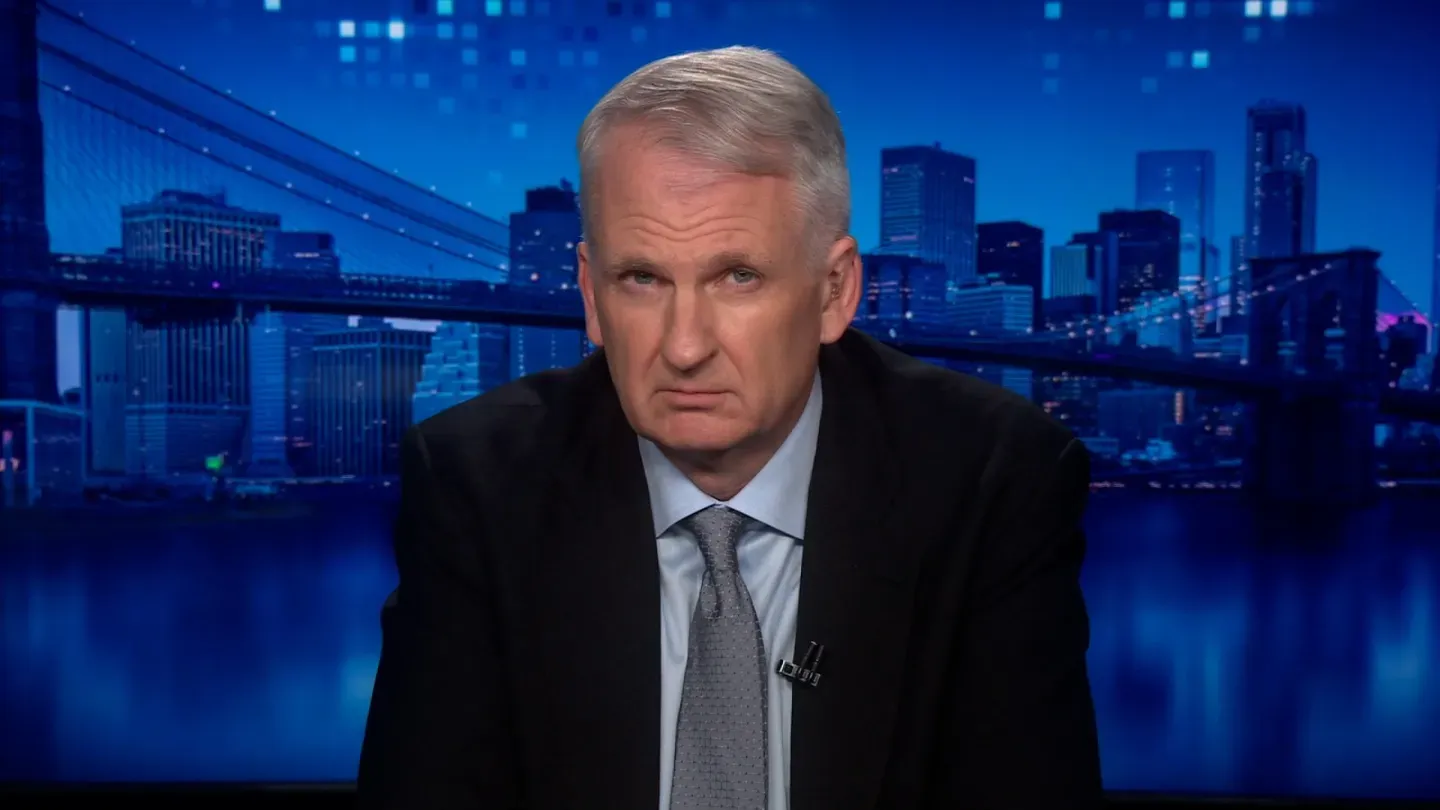
Ukrainian President Volodymyr Zelensky discusses the state of his country's war with Russia and how the war in the Middle East has played a role. Authoritarianism historian Timothy Snyder on Orban's defeat in Hungary and Trump's war in the Middle East. Mercy Corps CEO Tjada D'Oyen McKenna shines a light on the crisis in Sudan stemming from three years of brutal civil war.
Problems playing video? | Closed Captioning Feedback
Problems playing video? | Closed Captioning Feedback
July 6, 2026
7/6/2026 | 55m 54sVideo has Closed Captions
Ukrainian President Volodymyr Zelensky discusses the state of his country's war with Russia and how the war in the Middle East has played a role. Authoritarianism historian Timothy Snyder on Orban's defeat in Hungary and Trump's war in the Middle East. Mercy Corps CEO Tjada D'Oyen McKenna shines a light on the crisis in Sudan stemming from three years of brutal civil war.
Problems playing video? | Closed Captioning Feedback
Where to Watch Amanpour and Company
Amanpour and Company is available to stream on pbs.org and the PBS app.
Watch Amanpour and Company on PBS
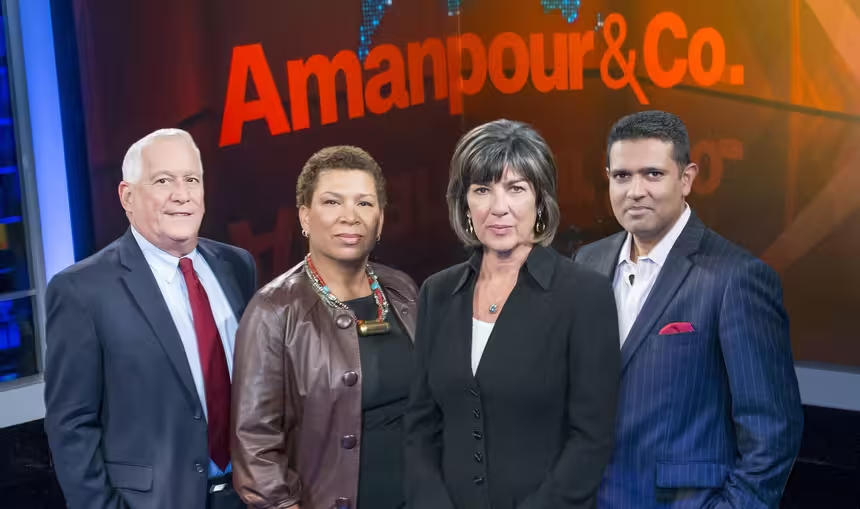
PBS and WNET, in collaboration with CNN, launched Amanpour and Company in September 2018. The series features wide-ranging, in-depth conversations with global thought leaders and cultural influencers on issues impacting the world each day, from politics, business, technology and arts, to science and sports.Providing Support for PBS.org
Learn Moreabout PBS online sponsorship(video transition swooshing) (upbeat instrumental music) - Hello everyone and welcome to "Amanpour & Company."
Here's what's coming up.
(video transition swooshing) - When you think that you have to close one war and then, you know, mediate another.
I think that it's doesn't work this way.
- [Christiane] With Ukraine's future now tied to the war on Iran, President Volodymyr Zelenskyy joins me to discuss how he has to compete for America's attention.
(video transition swooshing) And our President Trump's apocalyptic threat warning of the death of a whole civilization and such only words?
Timothy Snyder, a historian of totalitarianism reads between the lines of Donald Trump's messages.
Then... - This really is just a catastrophe that continues to pile on for the people of Sudan.
- [Christiane] Three brutal years of war in Sudan, Hari Sreenivasan speaks with Mercy Corps' CEO, Tjada McKenna, who's just returned from that devastated region.
(upbeat instrumental music) (upbeat instrumental music continues) (upbeat instrumental music) - Amanpour & Company is made possible by, the Anderson Family Endowment, Jim Atwood and Leslie Williams, Candace King Weir, the Sylvia A. and Simon B. Poyta Programming Endowment to Fight Anti-Semitism, the Straus Family Foundation, the Peter G. Peterson and Joan Ganz Cooney Fund.
Charles Rosenblum, Monique Schoen Warshaw, Koo and Patricia Yuen.
Committed to bridging cultural differences in our communities.
Barbara Hope Zuckerberg.
And by contributions to your PBS station from viewers like you, thank you.
- Welcome to the program everyone.
I'm Christiane Amanpour in London.
Four years of virtual stalemate in Ukraine.
Now, could the outcome of this war with Russia depend on Iran?
Both Kiev and the Kremlin are trying to use this other war to their own advantage.
President Zelenskyy visited the Middle East, offering battle tested expertise and experience on fending off Iran's drone attacks, while Russia reportedly backs Iran with critical intelligence and weapons support.
And for now it gains from soaring global oil prices.
President Zelenskyy says, "Every dollar Putin makes is more fuel for his war."
Indeed, Russia is launching a barrage of ballistic missiles and drones almost every day, as civilian death surge in Ukraine.
And despite Trump's promises and pressure for a quick peace deal there, his one set of personal negotiators are tied up now with stop and start negotiations on Iran.
In better news, for Kiev, the election defeat of Hungary's Viktor Orban, pro Putin, is unblocking a critical 90 billion Euro loan for Ukraine from the European Union.
And when I spoke with President Volodymyr Zelenskyy from his presidential office today, I asked him how he plans to use that money, and how he's navigating an increasingly complex relationship with the United States?
President Zelenskyy, welcome back to our program.
- Thanks so much.
Happy to see you.
- You too, and can I just ask you, because it's never good news when we talk, but perhaps there's a little bit of good news.
Do you expect now the $90 billion loan from the EU to Ukraine to come to you?
It has been provisionally approved.
- God bless, we will have it.
And I count on the EU unanimity in this positive unanimity.
Of course, Christiane, I think you understand it.
For us, it's huge, very important.
And this is not only strengthening our army, it's also how to defend all the energy objects.
We need to prepare for the next winter.
So, it is also about, social financial support, and et cetera.
So, this is very important decision.
- And your own government, your deputy prime minister called it literally a matter of life and death.
What would've happened had this not been provisionally approved, had all been not lost?
- You know, first of all, we have our own air defense system.
Yes, we don't have anti-ballistic, but we have our salt and our system of anti-drone interceptors.
Yes, drones interceptors.
We have huge production.
For these we need money, otherwise we will be, I mean this, we now we are under a tax 500, 600, already more than 800 during the 24 hours, such tax we have.
So, without financing, without funds, we can't produce as much as possible.
For today, we are producing about around a little bit less than 1000 of drones interceptors.
If we have money per day, per day, but we can produce 2000, but we don't have for this funding.
So, it's really the question of our life of the surviving, of defending.
So, we need this money very much.
- Mm, and let me ask you also, because obviously the war on Iran is detracting attention and maybe even equipment from you.
Do you feel that, tell me how it's impacted the kind of equipment, anti-ballistic missile defense, and the other stuff.
- We had the packages, according to our negotiations with the European France and with American partners, we had our program portal.
Through this program we can and could buy anti-ballistic missiles for systems patriots and patriot systems, and also some other weapon, which is very important for us, which we don't have in our European neighbors.
And so this is very important and of course according to the big challenge in the Middle East war in Iran and all these packages are in risk.
So, we had some, God bless that United States didn't close intelligence for us and didn't stop anti-ballistic missiles.
But be honest, a small number, we have not too much really not too much.
We understand why, because the production in the United States is not so big as all, not only Ukraine and other partners really wait and count on.
So, that's why this is a big challenge.
And if the war will continue or cease fire will be delayed, or I mean this, something will be not good, and I think that we will not have, maybe we will have more risks with anti-ballistic.
- You've said for Putin, a long war in Iran is a plus.
President Trump has essentially, I don't think he's called it a, I mean they've extended it until they can get proper negotiations with Iran.
Do you think this is hopeful, the fact that the hot war is on maybe being shelved for the moment?
- In anyway I don't know if it's ceasefire or not, but in any way, any pauses in any war, I think this is good because during any kind of pauses, you don't lose people.
The biggest challenge for any country, for any nation, any religions and et cetera, is to lose people.
That's why any pauses and between us, there is no price for such pauses.
If you can save people, great.
So, we support ceasefire, we support any pauses between us.
Sometimes during Easter, during Christmas, during New Year, during any kind of, even days when people can have, I dunno, just meetings with their children when soldiers can write the letter, speak and have some rest, and they say, I think it's great.
So, any pause, of course, peace is the best way for any war, long-lasting peace.
But if it's not, I mean this possible for today, but any pauses are great.
- Let me ask you then, because while they're trying to figure out a ceasefire and end to the US-Iran conflict, what about the Russia-Ukraine conflict?
Where are the ceasefire talks there that the United States was, you know, meant to be mediating?
- Russia doesn't want ceasefire.
And between us, I'm sure that they don't want to stop this war.
Even if some of them are really, the price of their ceasefire is not acceptable because we don't know what will be after, you know, such negotiations, when you don't know what guarantees that Russia will not come again with the aggression.
What guarantees we can have?
Really we have the proposition from American partners.
If you don't have people on your battlefield or on the contact line during ceasefire, if you don't have different representatives of different forces through the contact line, any kind of recommendations and trust and et cetera will not stop Putin just stop.
But we support ceasefire.
Where in this case now America, they shifted to the Middle East and they are deeply in Iranian question.
And I know that we have communication on the tactical level with their negotiation group and my group, and they have talks and they had, for example, yesterday, some phone calls and et cetera.
But we hope that we can organize the meeting.
I don't see now the, you know, the opportunity to meet today or tomorrow until the question, the case of Iran will only close or some fundamental ceasefire, - Ooh.
- something like this.
- Well, that's having to really rely on another war until you end yours.
You have said that President Trump does not want to irritate Putin and is trying to act like a negotiator rather than, you know, to take sides.
Tell me, you know, what you think now about the United States, the reliability of the Trump administration, who are you depending most on now?
- First of all, I think that it's big risks.
When you think that you have to close one war and then, you know, mediate another, I think that it's doesn't work this way because yes, I mean this, you have to think about, we don't have too much negotiations group from the United States.
And in this case I think it's a challenge that the same group is trying to manage both.
And I think what is important not to forget about Ukraine because we have really full scale innovation and big war on the land.
It's not only missiles and drones.
Yes, the war is now another modern war and a hybrid war, yes.
But in any way it's big land war with a lot of casualties.
Ukraine is already in such big tragedy.
So, we have to find a way how to think and manage in parallel way.
- Mm.
- This is what I think.
The question is, if we want to stop Putin, we have to say Putin that he's not right.
And if we start any kind of format of dialogue with Putin with the question, look we have to find some compromise for you and will you be able so kind, or et cetera, all this, you know?
I'm not sure that it works.
No, he feels that he's not guilty.
That this situation or somebody else, some sort countries or some other administrations, and et cetera, I'm not sure that they are guilty.
Putin is guilty.
And that's why I think that President Trump, President Xi, Modi, I don't know who are the biggest, I'm not sure too much in the world.
They have to speak with Putin that he has to stop this war.
They can't speak with Ukraine, that you have to stop the war.
So, we are not, I mean, we are in defending part of the war.
We are not aggressors in this war.
That's why it's not, I mean, helpful to stick with us to stop.
To stop what?
We have to stop all together Putin.
- Yeah.
- And we can stop it with weapon because he doesn't want to speak, and but they, what is the great leaders, what does it mean that they can stop by diplomacy?
- I understand.
- They can stop by diplomacy.
Yeah.
- Yeah.
Can I ask you, because you obviously have been a major pioneer, Ukraine, of the drone warfare, and this has become very, very important in the Iran conflict.
You yourself have gone over during this war to the Gulf countries, and you've signed all sorts of defense deals.
How important is that for you?
What have you done and what will you get back?
- Yeah, so we signed it, for today, we signed three documents.
It's drone deals with Saudi Arabia, Qatar, and Emirates.
So, this, but we will continue, we'll work with other countries, we will do it.
We will be ready to deliver them, first, our expertise will begin from this and we finalize this part.
The second point, it's about training missions and that because different countries... So, they have France, they have Italy, they have United States, they have UK, and they have Nordic countries, and also German and Israelian, and et cetera.
So, they have different cases.
They don't work in one system.
So, that I think this understanding expertise and this soft, what we have, how to join any kind of systems because from the very beginning of the war we didn't have the systems.
And when the different countries could give us all systems or new systems, and different productions, et cetera, we had to find a way how to organize them and to join to the one system.
That's why it's very helpful.
We will do it.
And also interceptors, cheap drones interceptors and also it can be about co-production and lines of production.
Cheap drone that they will destroy Shahid, for example, which cost can be from 80 to 100 salty thousands.
And they will destroy it not by missiles the price of each three million or four million.
If they will destroy it by drone interceptors, the price will be 10,000.
- Amazing.
- Something like that.
- Yeah.
- Not 3 million, so, yeah.
I mean it is also about sea drones.
We are very open for this.
Yes, we have big expertise, and we want to do it for them to help by the way, help people to defend.
Ahem, this is what we can do.
- Yeah.
- And also we will continue with other countries.
- Can I ask you one last question?
And it's kind of a funny one.
"The New York Times" is reporting that Ukrainian officials sort of raised the idea of naming a piece of Donbas, which your fighting over, Donnyland during some ceasefire talks.
Is that possible?
Is that true?
- First of all, I never spoke this way, and I never, yeah, I can't give the name of our part of our country, and/or where so many, many people are fighting.
I don't want to give them any kind of name.
For me it's Donetsk region and Luhansk's region with a Ukrainian flag.
Maybe it's not so funny and maybe it's not very successful name, but it's very original.
- Got it.
- And I hope that we will save it.
- I got it, President Zelenskyy thank you so much indeed for joining us.
- Thank you very much.
- Now, the defeat of Hungarian prime minister, and self-styled illiberal Democrat, Viktor Orban, is being seen as a major setback for right and far right politics all around Europe, and all the way to the United States and MAGA, where the Trump administration puts unprecedented stress on key democratic institutions.
Timothy Snyder is an acclaimed historian of authoritarianism.
His books "On Tyranny" and "On Freedom" are essential texts in a fast-changing world.
He sees a clear line between the conflicts abroad and the angry political climate in America, warning that President Trump may exploit the war to cement his grip on power.
Professor Snyder is joining us now to talk about all of this from his position as professor in Toronto in Canada now.
Welcome to the program.
- Very glad to be with you.
- So, we've talked a lot in the past, especially and often about the issues I mentioned, but certainly about how they're manifesting in Ukraine.
You probably just heard President Zelenskyy and again, you know, he's obviously standing up for the values that we've all been brought up with, democracy, freedom, human rights, and it's now into its fifth year.
Where do you think he stands now?
What did you take from what he told us?
- Well, first of all, the part, just that it's in the fifth year is itself a success.
It's a success that comes with a terrible price.
But Ukraine has managed to resist a Russian invasion for now going on four and a half years.
And on the battlefield this comes through in the undercurrents of what he was saying, things are actually going pretty well for Ukraine.
The drone superiority that they've managed to achieve through their own hard work and innovation is managing to hold off a good deal of the Russian invasion.
And I think, you know, they are quite rightly understanding themselves as in the middle of a larger international constellation where what happens in Hungary is good for them.
What's happening in Iran is not good for them, but they are their own force in the world now.
And I think that's in a sense, the bottom line of that conversation.
- And it actually is very much a change because in a way it's gone from supplicant to, as you say, being a force and actually sharing a hard won experience on the battlefield with, you know, the Gulf states and others.
But what did you, you know, it's quite sad to see that the Ukrainian situation is being kind of shunted to the side in terms of attention, weapons, mediation, negotiation because of the Iran war.
How do you think that that will, I don't know, continue?
He clearly said that, you know, the Trump administration doesn't have enough negotiating teams.
- Yeah, I mean, there are, I guess, three things maybe we could say as Americans that have gone wrong on our side.
Number one is that we always throw all of our attention towards what we are doing now.
So, the Iran War becomes the center of everything.
Whereas frankly, from any kind of other perspective, the Iran war is a pretty minor conflict compared to the Russia-Ukrainian war.
And the historical consequences, the Russia-Ukrainian war, also for us, I think are gonna be much greater.
Second, we have the problem that in starting the Iranian war, we have artificially raised the prices of oil, thereby giving Russia the income that it needs to continue the war.
If we hadn't gone into Iran, if we hadn't raised the prices of oil around the world, the Russians would be much more likely, I think, to be negotiating.
And the third problem, as you mentioned, is that we're not using the State Department, we're not using the massive elite, we're not using the bureaucracy that we have.
We're not using our civil service.
We essentially have two men who are responsible for negotiating everything.
And that's, I mean, just to be clear about it, that is very unusual and naturally it's ineffective.
Even if these two men were the best negotiators in the history of the world, there's no way that they could possibly cover multiple major conflicts at the same time.
So, in that way, also we're letting Ukraine down.
- Mm, and clearly that's, you know, that's what President Zelenskyy can see happening right now.
'Cause there's actually, as you said, almost no actual talks going on, some phone calls, et cetera, but nothing really.
Can I ask you for your opinion on, the West is supporting Ukraine for many reasons, especially to support democracy, as I said, and freedom, and to be, you know, not subject to invasion by your neighbor.
Many people who support the Iran war, including diaspora and others, say that that's what the Trump administration and Israel are doing in Iran, trying to cement some kind of future of freedom for the Iranian people.
Do you see it that way?
- I mean, all I can do is base my own judgment on the evidence of what the Trump administration, and for that matter, the Netanyahu administration have said.
And there is almost no trace even that they are pretending that that is what the war in Iran is about.
And if we look to the backdrop of other recent American interventions under the Trump administration, there was no sign, although it would've been much easier to do, there was no sign that they supported the democratic opposition in Venezuela, although that I think was relatively easy compared to transforming Iran.
It's sad to say, but I'm afraid we went into Iran on the basis of a strategy which we are still unable to name, and the likelihood that what we do was intended to be for the Iranian people or will somehow benefit the Iranian people in the end seems to me to be sadly quite low.
- And of course many, not just the Iranian people, but many people all over the world, including some of the countries that tried to, you know, initiate the ceasefire talks were absolutely, I don't think panic is too strong a word, when President Trump said that they were going to wipe out a whole civilization, "A whole civilization will die tonight, never to be brought back again."
That's what he said, before then saying, "Well, actually we're going to go into ceasefire talks."
You have said those words are now on legal record and they are America's words until America retracts them.
Tell me what you mean because clearly Trump, Hegseth, they're not gonna retract those words.
- Yeah, I mean there's a strategic point, which plenty of people have made, which is that you shouldn't make threats, which you're then not going to fulfill, right?
As strategy, this is sadly making a mockery of Americans, but you can be both incompetent and malicious at the same time as law and as ethics, this is actually horrifying.
To take a step back, the reason why it's usually hard to prove genocide is that there's the lack of an express intent on behalf of the commander in chief or the political leader of a country.
Now, we have on record the genocidal intent of the president and the commander in chief.
And so this means that hence forth, anything the United States armed forces do come under the shadow of that expressed intention.
But I would say there's something even more important, as Americans, we have to be able to say, it's not normal to wish for the destruction of entire civilization.
Whether or not we end up doing things consistent with that, just having that wish expressed in our name changes us and taints us.
Or to put it more positively, it gives us a chance to say, no, there are actually lines, whatever we might think about other issues, there are lines that ought not to be crossed, and the expressed wish for genocide is one of those lines.
- And what would you say to those who always say, Trump doesn't mean that it's just his way of putting pressure, it's just his way of negotiating in public and kind of showing who's boss.
- Yeah, I mean, as negotiation, it obviously failed completely.
It had no effect on negotiations.
And if you look at the reactions of people beyond the United States, there's no sign that anyone took that seriously as a display of power.
But I'm afraid that when we say as Americans, if we say things like, well, if we make any kind of excuse, right?
That this was just a tactic, it was just a technique.
Well, let's ask ourselves, would we say that if in a historical case, or if somebody in another country was saying that?
We have to be very careful that we're not making excuses for ourselves because when we say, "Oh, Trump doesn't mean it," or "He's just bluffing," or whatever, what we're doing is we're missing the opportunity to say, "Actually the United States should not be a country where we express the wish to destroy an entire civilization."
So, I think whatever we say, it's kind of a dodge so that we don't say the thing that I'm afraid we really should be saying.
- (sighs) This week is also, or last week was also dominated by these images and this whole argument about President Trump dressed as a Christ-like figure healing.
And then another one where he's being hugged by the figure of Jesus Christ.
And there's this whole situation developing in the public sphere now in the United States.
Many Christians are very offended.
They call it blasphemy, including some of his allies, his MAGA allies.
Others is just saying, "Well, it's just a thing," you know, as people do try to, you know, wipe these things away or push them away.
A lot of this war talk is actually, you know, sort of wrapped in religious speak, certainly from Hegseth at the podium.
What do you make of that?
- I mean, on the strategic side, it leads you to the conclusion which Hegseth himself has drawn, which is that war is just about killing people that you regard as infidels.
I regard that as morally wrong, but I also regard that as very poor strategy.
It's no way to plan, win, or get out of a war.
On the domestic political side, I think there's a different significance, which is that the president is facing a set of November elections where his party is very likely to lose in a walloping fashion.
And I think the appeal to the Christian imagery, the notion that Trump himself and like it just pains me to say these words, is some kind of messiah.
I think that is a claim for another kind of political legitimation that doesn't come from the ballot box.
In other words, even if I lose, even if my party gets destroyed in November, I still should have some kind of claim on power because of this thing.
- So, let me play for you this piece from Two Chronicles, that's the Old Testament.
He did it in front of, you know, for a Christian group's week-long Bible reading event and it was in the Oval Office.
- "If my people, which are called by my name shall humble themselves and pray and seek my face and turn from their wicked ways, then will I hear from heaven and will forgive their sin and will heal their land.
Now my eyes shall be open and my ears attend to the prayer that is made in this place.
For now I have chosen and sanctified this house that my name may be there forever and my eyes and my heart shall be there perpetually.
And as for you, if you will walk before me as David your father walked and do according to all that I have commanded you."
- So, I heard, you know, an analysis from a religious authority here in the UK that it seemed that he had never read that before.
And it seemed he thought to do what you were suggesting.
He has to bring the MAGA, the Christian evangelicals back on side after all these, this is this person's analysis, after all this, you know, I don't know what to say, what they call blasphemy in these pictures that he's been posted.
In other words, he has to re-cement the Christian evangelical vote that put him in power.
Do you buy that?
- I mean, I think he's waded into some difficult waters because the man himself is obviously an unbeliever, and he's, as you say, he has won a huge percentage of the evangelical vote before.
But the moment where he actually tries to insert himself into a Christian discussion or worse portray himself as a Christian savior, he's going to not only offend people, but he's also going to get himself into intellectual situations for which he's not really prepared.
I think the move that he wants to make is to get himself understood as a kind of savior figure.
I think that's what he's trying to do, but I think it's harder than perhaps he thinks it is.
- And just to, you know, to sort of go back a bit, many American presidents have used Bible passages, you know, even on the inauguration day.
What's the difference?
- Well, I think it's fair to say that in every previous case where a president cites a Bible passage, we wouldn't have been confused what he meant by the word "I."
When Trump cites a Bible passage, one has good reason to think that he may be confusing himself or want us to confuse him with the biblical actors themselves.
That's the context that we have, right?
The context that we have is that Mr.
Trump is attempting to conflate himself with people with divinity, with Christian divinity.
I would say that that is new.
- And so is such a walloping row between American president and a pope, in this case an American Pope, Leo.
And, - Mm-hmm.
- this is also very unusual.
There have obviously been disagreements between world leaders and the pope in the past, but this huge disagreement is pretty noticeable.
And you have started using afraid, a phrase, sorry, "superpower suicide" to describe the state of America.
You've, you know, it's not declined, it's not collapsed.
You've also called it "attempted suicide."
I'm not sure whether that's, you know, to leave room for a little hope.
But tell us what you mean by that.
- Well, I think when, look, we started, we've been talking about the war in Iran, which is a war for which we didn't have a justification, which we're losing, and as we've discussed, recovering in genocidal rhetoric.
And I think that's not a coincidence.
I think that's a symptom of something deeper.
And when I say superpower suicide, I'm trying to emphasize choices that are being made to make the United States much weaker than it has to be.
And those choices involve things like governing as a group of oligarchs rather than as a state.
They involve not having a coherent ideology about the future of the United States.
They involve deliberately missing technological transitions that are very important, especially involving energy.
They involve having a completely impossible fiscal policy where you're spending much more than you're taking in.
They involve undoing science and education, which are the pillars of long-term strength.
And all of this is a matter of choice and all of it's happening in the last year.
And there are other things one could say, like deliberately alienating allies, which is historically very weird, not being able to handle adversaries, losing a trade war to China, assisting Russia, breaking down the international order, which for generations was built up to put America in the center.
All of that's happened in the last year.
So, I'm just looking for a kind of a conceptual cover, something to put around that where we can see what's right in front of our eyes.
- And what is also right in front of our eyes happened in the middle of Europe where Orban, Viktor Orban of Hungary lost in a walloping fashion, to use your terminology.
And I wondered whether you see that in the bigger picture.
Clearly it sent shockwaves through lots of right-wing politics over here and in the United States, and the new prime minister, Péter Magyar, has made it a point to reverse and talk in a much, much different way than Orban did.
So, I guess what I'm asking you is, that's accountability after 16 years in power, the people finally said even though he had his hands on the all the important levers of democratic institutions and power, Orban, he nonetheless lost.
What does that tell you?
- Yeah, I mean, number one, the reason it sends shock waves is that MAGA is part of an international coalition of which Orban was the center.
They've been borrowing memes and taking money from Hungary for quite a long time.
And when I say they, I mean very specifically institutions like the Heritage Foundation or CPAC.
And then for Trump and Vance personally, Orban is the sorcerer and they are the apprentices.
Orban was the master and they were the students.
They learned from him.
And the fact that he lost shows that it's not inevitable, their kind of politics, they can be beaten.
On the other side, it has immediate significance for institutions around the world.
It will be much easier for the EU to function, much easier, as you discussed for Ukraine to get aid.
And if you are part of an opposition to the kind of oligarchic authoritarianism that Orban pioneered, say in the United States or anywhere else, what you learn is that you can win an uphill election.
You can win an uphill election in decisive fashion, if you are able to bring together organized protests with the election, and if you're able to make the case that Magyar did, which is that your daily life, the struggles in your daily life the things we call affordability in the US, that those things are connected to democracy.
That the abuse of power that goes on and on that thing, that failure, that weakness, that attempt to bring down democracy, that is also the thing which is making your life harder.
Magyar did a wonderful job at explaining that, and that's one of the reasons why he galloped away to victory.
- In 30 seconds you have gone to Canada to be a professor.
Do you think that's what Canada's doing under this current leadership of Prime Minister Carney?
- Yeah, I'm actually in New York now.
- I know you are, but you, - Nice to be here.
- you came from Canada.
- Yeah.
- Yeah, mm-hmm.
- But it's, you know, it's refreshing to see a government that has a majority and have the leader of the government stand up and say, "Here are all the laws that I can pass."
And it's also refreshing to see the leader of a government stand up and say, "Yes, there's turbulence to our south and around the world, but we're taking this opportunity to do things more clearly and to see the world more clearly."
Yeah, that is refreshing and I take some hope from that.
- All right, Professor Timothy Snyder, thank you so much for being with us again.
- My great pleasure.
Thank you.
- Now, to Sudan where millions of people are trying to survive on just one meal a day, according to a new report published by several humanitarian organizations, who say many Sudanese have resorted to eating animal feed and leaves.
Tjada McKenna, CEO of Mercy Corps joins Hari Sreenivasan to discuss that report and what she witnessed on a recent trip there.
- Christiane, thanks, Tjada McKenna, the CEO of Mercy Corps, thanks so much for joining us.
You recently just returned from Sudan and I wanna point out some of the grim milestone numbers that your organization Mercy Corps released in a recent report.
It said 15 million people have had to flee their homes.
You say about twice that number, almost 30 million people are in need of some sort of humanitarian aid, which makes this the worst humanitarian aid crisis on the planet at the moment, just by sheer numbers, what did you see on your most recent visit?
What are the people that you spoke to telling you?
- What we saw is, you know, civilians who are entering year four of this conflict.
Several people told me stories of having to flee more than once to different areas to get away from conflict.
And that fleeing, one of our own staff members told me that she was walking by foot for 21 days, right?
And in that 21 days, you're dodging conflict, you're dodging robbers, you are looking for food, you're looking for sustenance.
The Sudanese people are quite resilient and they're working to help themselves, but they're really struggling with lack of availability of food, displaced family members.
People haven't seen some of their families in multiple years, as people have fled here and there, and really trying to make a living, and keeping things going as this conflict grinds on and on.
- So, what's the most pressing need right now?
I suppose it's probably dependent on location that you talk about, but is it healthcare?
Is it food?
Is it shelter?
- Yeah, a lot of the systems that civilians rely on to live have been decimated and deliberately attacked during this conflict.
What we're hearing from people closest to the conflict lines are that healthcare facilities have been systematically destroyed.
So, there is very little healthcare.
Also this is a severe food crisis.
Sudan is an agricultural producing nation.
We have turned agricultural fields into battlefields.
The closer you are to the conflict, the food that you're eating has had to cross battle lines.
Right now, particularly with the war in Iran, prices are up, fuel prices are up over 35%.
You need fuel for generators for any agricultural production.
it's planting season right now.
- Mm-hmm.
- Fertilizer, they rely on fertilizer and other supplies coming in through the Strait of Hormuz, and all those fuel prices increases rocket through society, right?
So, it's food prices, it's everything they need to do is now more expensive.
So, this really is just a catastrophe that continues to pile on for the people of Sudan.
- You know, when you look at this kind of ripple effect that you're talking about, about fertilizer costs and fuel costs, I mean, this is sort of an American frame, but most of the imagery that we are familiar with, Sudan, at least in the recent past, is a war torn land.
And what you're describing is that there was actually and is agricultural potential and there were and are sort of crops that are being grown there.
- Yes, Sudan is quite a large country geographically, and a lot of the violence has been localized to certain areas or it has moved.
So, you do have pockets that have been relatively stable through the war.
You have pockets that are newly stable.
And so what you have are people who have moved to security when they've moved to Sudan, they've moved to these pockets of security.
Sudan, the largest piece of the economy is agriculture.
People depend on food to survive, but also for income, for exports.
And so, right now we are in the middle of planting season, so people need inputs, they need fertilizer, they need seeds, they need to make decisions about those things, and with prices up those things are in scare supply.
And you know, with agriculture there's like a small window of the time for things to happen.
- Yeah.
- So, decisions people make now affect food security for months, even a year to come in some places where there's only one crop cycle a season.
So, people should think of it as a big country, and particularly before the war, you know, when I talked to our staff, especially people that were living in Khartoum, you know, the whole city had to flee when it was taken down.
These are people who were going to university, who had jobs, quite cosmopolitan, used to going to restaurants every night, families forced to flee in all directions.
And what you still have in parts of Sudan are people that are working to make a living, that are providing, a lot of people who've been displaced, who are providing income for their relatives, still in conflict areas, and people trying to reunite their families, and determine how to survive and what they're going to do, as this conflict grinds on.
- So, if I'm a farmer and the cost of running my tractor just increased significantly because the fuel is not flowing through the Strait of Hormuz, and it's gotten more expensive.
If the price of fertilizer, which I need for this planting season is now through the roof, because half of that comes through the Strait of Hormuz, do I give up on this crop season?
Who absorbs the cost?
- Yeah, if you're a farmer, you're likely to not give up just because that is your income and you need some of that for your food themselves.
But, the chief economist, - Yeah.
- of the food and agriculture, the US food and agriculture organizations that farmers have like a 40-day window where they like make choices and don't look back.
So, either you're farming a smaller piece of land or you're deciding to go ahead with suboptimal inputs and hoping for the best.
And particularly with fuel crisis where you may need some of that fuel to run tractors or to run your irrigation system.
You quite literally are at the mercy of weather, and all kinds of other things.
So, you are planting and hoping for the best.
- And in some cases, - Yeah.
- what we've seen from farmers who are closer to the conflict, you're also praying that you are there and have not had to flee by the time that harvest comes.
- Yeah, so, what happens to the long-term infrastructure costs to this economy if the irrigation systems that the farmers depend on are attacked or bombed, because that takes a long time to rebuild.
- We do need to rebuild them.
And what we're seeing now in areas that are kind of past the conflict or who've settled into a more stable day to day is, you know, already the funds that were needed for emergency humanitarian assistance were quite low.
But now there really are no funds for what we consider long-term developments.
That is things like rebuilding irrigation systems, rebuilding civilian infrastructure, and you still have tens of millions of people trying to live in these places that need that infrastructure.
They need the irrigation, they need functioning healthcare system, they need, - Yeah - functioning markets.
And that's what people of Sudan are asking for.
They're saying, "Invest in us.
We are competent, we are resilient, we are here, we're not leaving our country.
Help us to rebuild."
- Yeah.
- That's exactly what people are asking for at this moment.
- You know, if so many people have fled, I'm wondering if the remainder of the population in some areas are people who were kind of left there to hold down the fort, so to speak, you know, you have some members of the family who might be leaving to try to get some income somewhere else to send money back, and then, so, what happens to that core population who's left on the ground?
- Well, that's exactly what I'm hearing.
So, there is some fluidity in terms of people coming back or hoping things have settled and trying to go back to more stable places.
You know, some of my own staff members have said, "Look, I'm the one that was designated to go work, to go bring income back," or many of my staff members are hosting, like, you know, upwards of 10, 15 members of their family themselves.
So, these are people that are the lifelines for large numbers of people and they are people that really love their country and that want to stay.
They want to see their relatives who've had to go to other countries or neighboring cities return.
I have younger staff members who they're trying to still arrange marriages with people who live in other places.
Like people, you know, - Yeah.
- they're hopeful, they want to move on, they want to live their lives, and they want to rebuild, and they're asking for that support to try to continue to survive and thrive.
- I also wanna ask a little bit about the sort of youngest victims of this.
According to a recent report from UNICEF, more than 4,300 children have been killed or maimed this year alone.
And an estimated 4.2 million children across Sudan are expected to suffer from acute malnutrition.
How does Mercy Corps respond to something, a crisis like this?
- Yeah, women and children are always the most vulnerable in these situations and Sudan has been no different.
When you're attacking healthcare centers, you're attacking children.
When we have situations where people are down to one meal a day, it's children, especially the youngest children that feel that most acutely.
In one area of Darfur, of the children that we were able to get to and measure more than 70% were suffering some effects of malnutrition already.
And depending on the severity of that, that can cause like brain damage and other damage that people don't recover for from life.
So, we're quite worried about young people, very focused on making sure they have safe spaces, that they are able to go to school where necessary and making sure that their families have access to cash, to supply their needs and to help them, and access to food as well, so that they're not starving and suffering.
- You know, something that's a little bit disconcerting I think is how normalized it's become for us to hear about attacks on civilian infrastructure.
And I know that you've also recently visited Ukraine, and I'm wondering if there's this, you know, through line it's something different happening in how we prosecute wars, whether it's Ukraine or Sudan or Iran.
I mean, we recently had the US president threatening desalination plants and power plants as if that was normal.
- Yeah, we are sadly entering what I'm calling an era of indifference.
You know, attacks on civilian infrastructure, were considered war crimes.
They're not legitimate means.
And starting with the Ukraine war and on that we've seen increasing attacks on civilian infrastructure.
Like, you know, deliberate attacks on hospitals in Ukraine.
You're seeing deliberate attacks even on large agriculture facilities, particularly now in this area of drone warfare.
Those attacks have become even more personalized and specific to civilian infrastructure, whether they be agriculture areas, hospitals, electricity supplies.
And so, increasingly not only are civilians being targeted, but the lifelines that they need to survive are being seen as legitimate targets.
And that's unacceptable and it is something that we as a world need to recommit to saying that this is unacceptable, and that these are not legitimate rules of war.
And we're seeing these practice by states, as well as armed groups, it's unacceptable.
- So, how does an organization like yours, Mercy Corps, try to (chuckles) assist when it's these larger structural problems that you're having to overcome and the people who are coming to you are saying, "Listen, I'm a farmer, but the irrigation system just got bombed and I need money for seed and my fertilizer costs and my fuel costs are up."
Where do you begin?
- Yeah, almost every single one of my staff members are people that are displaced themselves.
People that are working for us in cities where often they're not far from home.
And so what we really look at the resilience and the strength of the people that we work with and try to marry them.
We work with a lot of local Sudanese organizations who may have access to places that we don't.
We are talking to them about their informal networks and bringing people together.
We're trying to keep the economies going.
There are still local markets that are functioning.
We're trying to balance out supply and demand.
We do that a lot through the provision of cash, so that people can buy what they need.
We also are helping small businesses that buy agricultural supplies or that buy other goods to keep these markets going so that people do have healthy and sustainable ways to make a living and to get the other supplies that they need.
So, we really try to work within the systems that they did exist while also doing our best to advocate in foreign capitals and other places for pressure to not be harming civilian infrastructure, to do peace negotiations, and to provide funds for people who are trying to help themselves do that better.
People in Sudan are working so hard and so hard just to survive, and they deserve more from us.
- Yeah.
- Is there any hope of this war, this conflict ending?
I mean you've had these kind of donor conversations recently in Berlin, but also in London and Paris, and they seem to be on kind of parallel but distant tracks because the people who are (chuckles) who are actually in war, the main sides, they're not necessarily at these tables.
- Yeah, there's an old saying like, "No, you can't be for us without us," and obviously the people of Sudan need to be in these conversations.
The civilians of Sudan need to be front and center in considerations here.
But also we have to recognize where things are relatively stable areas that are no longer in active conflict.
We need to be supporting those in conflict, but also those areas that may be past that point to be resilient and to thrive to help the rest of the country survive through this conflict.
- Gimme some perspective on what the kind of international aid community's capacity is because, you know, look, we've gone through different natural disasters, we've gone through different conflicts before, but right now it just seems like you've got, you know, Gaza to Ukraine, to Lebanon, to Sudan.
There are so many different crises at these conflicts that are happening around the world right now that are putting so much pressure on different populations.
Are we at capacity, near capacity, over capacity and what we can do about it?
- Yeah, the aid system has really been severely disrupted and devastated.
The United States funding accounted for more than 40% of humanitarian funding worldwide.
That just wasn't funding a lot of United States work was underpinning supply chains and in its entire ecosystem of actors from the UN to international NGOs to local NGOs.
So, the way that the US kind of unilaterally pulled out of the system in a very sudden way, really like upended all of those things.
And it's been, you know, all of those cuts to the UN systems, you know, we depend on UN Air Services to move around in a lot of these places that are difficult to reach, - Oh.
- even down to supply chains for things like malnutrition that has affected the whole system.
So, you had a system that was already regrouping and trying to figure out how to just do day-to-day things with less funding, and it was learning the things that were there.
And then on top of that you have crisis after crisis compounding.
So, when the US pulled out, then we saw several European donors also with pulling back funds to fund their own defense.
- Yeah.
- On top of that, we've seen escalations in the war in Ukraine.
This war in Iran, all of a sudden Lebanon, you see large numbers of people in need throughout the Middle East that were not in need before.
So, at the same time that we have pulled back money from the humanitarian aid system, we've also increased conflicts and disruption to add to the number of those people needing assistance.
So, the system really does need to be funded and we really need more efforts towards peace efforts around the world.
- Yeah.
- So, that we can get to the people that need it the most.
- Yeah, I know one of your former jobs was at USAID around food insecurity.
And I wonder if you have, you know, a kind of a before and after that you can tell us or think about where, when you were in that job, what was perhaps the assistance in a crisis?
Like what's happening in Sudan versus what you were seeing on the ground today without USAID's presence.
- I did have the privilege at serving at USAID for a number of years.
Before, in a crisis like this, you would see like a, you know, a lot more of a diplomatic effort on the ground, like a strong cadre of USAID staff who were very in the know of what was going on, funding a variety of international and local actors.
You saw a UN that was much more robust and had a lot more capacity to do coordination services across agencies.
And you saw a lot of flexibility in terms of really like meeting people's needs.
Right now that... There was also a certain amount of diplomatic pressure that the presence of the diplomatic core could exert on local authorities and people in the conflict who are causing it to kind of, to protect civilian infrastructure and do that.
- Yeah.
- Now, not only are you seeing that funding not being there, you're seeing people that aren't as aware of what's happening, aren't as in touch with the different actors on the ground not helping play that central coordination function.
And you're just seeing a lot of people struggling to serve and less of a sense that there's a bit of a calvary that's on its way there.
There's a void, there's a big void there.
- Yeah.
- And it's felt - The CEO of Mercy Corps.
Tjada McKenna, thanks so much for your time.
- Thank you for having me.
- And finally, today we mark Earth Day, a celebration dating back to the 1970 and an annual reminder to protect and champion environmental action, as demonstrated by these activists in Cape Town South Africa.
This year's events have been themed "Our Power, Our Planet," and they reflect the importance of sustained daily action from educators, families, and communities across the globe.
Instead of relying on a single administration or organization, it's all about the collective.
And that's it for our program tonight.
If you wanna find out what's coming up every night, sign up for our newsletter at PBS.org/Amanpour.
Thank you for watching and goodbye from London.
(upbeat instrumental music)
 New Episode
- News and Public Affairs

Top journalists deliver compelling original analysis of the hour's headlines.
 New Episode
- News and Public Affairs

Today's top journalists discuss Washington's current political events and public affairs.

 New Episode
 New Episode
 New Episode
 New Episode


 New Episode
 New Episode
 New Episode
Support for PBS provided by: